Unlocking the Potential of Nanotubes and Nanowires with Sterlitech Track-Etched Membranes

What Are Nanotubes and Nanowires?
Nanotubes and nanowires are one-dimensional nanostructures with extraordinary properties, making them essential in cutting-edge fields such as electronics, energy storage, biomedicine, and catalysis.
- Nanowires are solid, wire-like structures with diameters in the nanometer range and a high aspect ratio. They exhibit unique electrical, thermal, and mechanical properties due to their quantum confinement effects and high surface-area-to-volume ratio.
- Nanotubes are hollow cylindrical structures, often composed of materials like carbon, boron nitride, or transition metal compounds. Their hollow nature allows them to encapsulate materials, making them useful for targeted drug delivery, sensors, and molecular transport.
Both structures hold promise for applications such as nanoelectronics, flexible displays, high-performance batteries, and even medical therapies. However, producing uniform and precisely controlled nanotubes and nanowires is a major challenge in nanotechnology.
How Sterlitech Track-Etched Membranes Enable Nanotube and Nanowire Fabrication
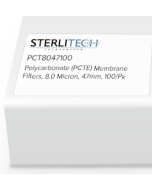
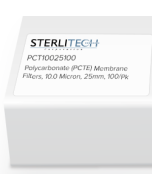
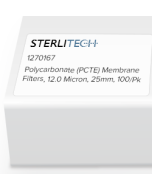
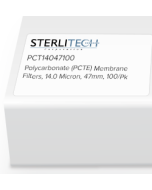
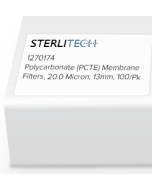
One of the most reliable methods for synthesizing nanotubes and nanowires is template-assisted synthesis, which uses porous membranes as a structural guide to control the growth of nanostructures. Sterlitech’s track-etched polycarbonate (PCTE) membranes provide the ideal template for fabricating high-quality nanowires and nanotubes due to their precisely defined pore sizes and cylindrical structures.
Key Advantages of Using Sterlitech Track-Etched Membranes:
- Uniform Pore Size & Shape – Sterlitech’s membranes have precisely controlled cylindrical pores that dictate the diameter and uniformity of nanowires and nanotubes.
- Scalability & Reproducibility – The controlled structure of track-etched membranes ensures reproducibility, which is crucial for research and industrial applications.
- Versatility in Material Compatibility – These membranes can be used to fabricate nanostructures from metals, semiconductors, oxides, and polymers.
- Ease of Removal – After synthesis, the membrane can be dissolved or peeled away, leaving behind free-standing nanostructures.
Applications of Nanotubes and Nanowires Made with Track-Etched Membranes
Researchers and engineers across industries can leverage Sterlitech membranes for various applications:
- Electronics: Silicon and metallic nanowires are used for next-generation transistors, nano-scale interconnects, and flexible conductive films.
- Energy Storage: Nanowires made from materials like silicon or manganese oxide enhance the performance of lithium-ion batteries and supercapacitors by increasing surface area and conductivity.
- Biomedical Research: Drug delivery systems utilizing nanotubes allow for targeted therapies with reduced side effects.
- Catalysis & Sensors: Metal oxide nanowires and nanotubes serve as catalysts and highly sensitive chemical and biosensors.
Sterlitech’s track-etched membranes offer researchers and engineers a powerful tool for creating precision nanostructures with consistent results. As demand for high-performance nanomaterials continues to grow, the ability to manufacture nanotubes and nanowires efficiently will unlock new possibilities in medicine, energy, and beyond.
Sources:
Li, X., et al. "Fabrication of Synthetic Nanotubes and Nanowires." Nanoscale Advances, 2025. DOI:10.1039/D4NA00735B
Zhang, Y., et al. "Electrochemical and Chemical Synthesis of Nanostructures." Nanoscale Research, 2023. DOI:10.1039/D3NR03783E
Patel, R., et al. "Advancements in Nanowire Growth Techniques." Nanoscale Research, 2023. DOI:10.1039/D3NR03332E
Smith, J., et al. "Track-Etched Membranes in Nanotechnology Applications." Journal of Materials Chemistry A, 2016. DOI:10.1039/C5TA10639G