Blog
-
June 15, 2026
Legionnaires’ Disease is a type of pneumonia that is caused by Legionella bacteria, which commonly grows in warm, stagnant water. Infection is acquired by inhalation of contaminated water from man-made water sources [1]. Due to the public health risks associated with Legionella, routine monitoring of water systems is an important component of water quality management programs.
-
June 15, 2026
The U.S. Food and Drug Administration (FDA) together with the Department of Health and Human Services (HHS), recently announced plans to phase out several petroleum based synthetic food dyes from the U.S. food supply [1]. This shift is expected to accelerate investment in natural colorant development, creating new challenges for food and beverage manufacturers seeking to maintain color consistency, stability, and production efficiency.
-
June 12, 2026
The future of biomedical research is evolving rapidly. In 2026, the National Institutes of Health (NIH) announced a $150 million investment to advance human based research technologies and reduce reliance on animal models [1].
-
June 08, 2026
Use clean, pure water, which has preferably been filtered in one of the following ways: via RO (reverse osmosis), DI, or has been distilled.
-
May 11, 2026
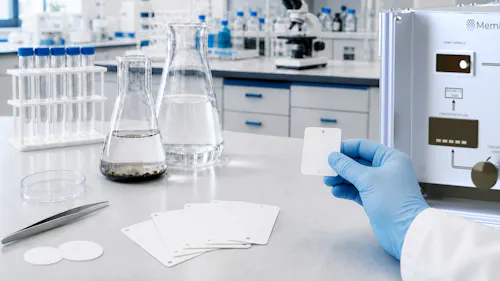
Microbiological testing of water is not just a regulatory requirement – it is a direct safeguard for public health. When a membrane filter produces a false negative, a contaminated water source can be cleared as safe. The consequences extend far beyond the laboratory.
-
May 11, 2026
Learn how researchers at VIMS revolutionized their water filtration workflow for microplastics research using the SolarVac Rotary Manifold System.
-
May 08, 2026
Hold up volume in Skid Mount Membrane Systems can lead to inefficiencies, contamination, and inaccurate measurements. Removing it is essential for optimal performance in filtration and process applications. Alongside our Vacuum Recovery Kit, another effective method is using pressurized air to purge unwanted fluid from lines, valves, and fittings.
-
April 22, 2026
This Earth Day, one environmental issue demands urgent attention from the scientific and filtration communities: the global rise of PFAS contamination and the role our industry plays in addressing it.
-
April 13, 2026
Per- and polyfluoroalkyl substances (PFAS) — including well-known compounds like PFOA (perfluorooctanoic acid) — are a class of synthetic chemicals derived from fluorinated hydrocarbons. Because the carbon-fluorine bond is one of the strongest in organic chemistry, PFAS persist indefinitely in the environment, earning them the name “forever chemicals.”
-
April 10, 2026
Global plastic production now exceeds 460 million tons per year, and microplastics are now being detected everywhere from oceans to human tissue. In filtration and membrane science, this is not an abstract issue. It is something that is measured, tracked, and increasingly studied. As the research continues to develop tools to assess the impact on human health and the environment, it is reasonable to also examine what is happening on the materials side.