New Reverse Osmosis Study Explores Produced Water Treatment with Sterlitech Testing Cell

Produced water from oil and gas operations is among the most challenging water streams to treat. Its extreme salinity and complex chemistry make conventional methods inefficient and costly. As water scarcity grows, researchers are turning to advanced reverse osmosis (RO) technologies that can manage these harsh conditions more sustainably.
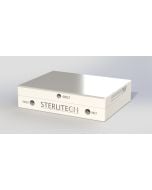
In a recent Desalination study, researchers from the ConocoPhillips Global Water Sustainability Center (Qatar) and the Center for Advanced Materials at Qatar University used Sterlitech’s Crossflow Hastelloy Sepa Membrane Testing Cell to evaluate two emerging RO processes for high-salinity brines: Low Salt Rejection RO (LSRRO) and Counterflow RO (CFRO). Sterlitech’s system provided the precision and corrosion resistance required to test these technologies under extreme conditions, enabling accurate data collection across multiple stages of experimentation.
Study Highlights
The research team set out to evaluate whether LSRRO and CFRO could effectively produce high-quality water from brines containing up to 120 g/L of total dissolved solids. Key findings include:
- Both processes achieved high-quality permeate suitable for reuse.
- Energy efficiency: CFRO consumed less energy (7.1 kWh/m³) compared to LSRRO (18.1 kWh/m³).
- Membrane area: LSRRO required five times less membrane area than CFRO, reducing footprint and capital investment.
- Environmental trade-offs: CFRO generated lower greenhouse gas emissions (3.0 vs. 7.6 kg CO₂/m³) but produced more solid waste and required more cleaning chemicals.
These results highlight the balance between energy consumption, system complexity, and environmental impact when applying advanced RO systems to real-world produced water streams.
Advancing Sustainable Water Treatment
This study goes beyond technical comparison—it points toward the future of sustainable water treatment. By quantifying trade-offs in energy use, capital investment, and environmental impact, the research offers practical insights for industries facing growing water management pressures.
By supporting studies like this, Sterlitech reinforces its role as a trusted partner for researchers advancing membrane science and developing solutions to some of the world’s toughest water challenges.
Read the full study in Desalination here.
Learn more about Sterlitech testing cells for advanced membrane research here.