Microbial Detection in Samples: A Critical Step Towards Food Safety

Contamination in food can fall into one of three categories: Physical, Chemical or Biological. Physical contaminants are solid particles that may come from the preparation process or food byproducts not intended to be consumed.
Examples include eggshells, bones, plastic wrap, staples, and paper packaging that may end up in the final packaged food product. Chemical contaminants are substances that can be carried over from food preparation, such as detergents, pesticides, or other cleaning chemicals, which can contaminate food when not properly washed from food contact surfaces. These two types of contaminants can easily be detected by either visual inspection or mitigated by good manufacturing practices. The last type of food contamination is more difficult to detect, and strict monitoring is required. Biological contamination , such as microorganisms, yeasts, and molds, poses one of the biggest threats to health and safety as this shortens the shelf life of packaged food products. When spoiled food contaminated with harmful microorganisms is consumed, it becomes a source of food poisoning.
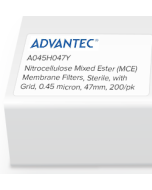
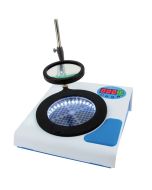
One of the ways to detect Microbial contamination in food and beverage is by conducting Bioburden testing. The process of isolating microorganisms in food, culturing isolated cells calculating the viable count and the resulting Colony Forming Units (CFU) will provide numerical information on the number of cells that grow in the food. Microbial count in food can easily be done by homogenization of the solid food sample in water, then adding a portion of the homogenized liquid on the agar plate. In contrast, the microbial count in liquid food samples, such as milk, requires an additional membrane filtration step. Typically, 100mL of sample is serially diluted filtered using a sterile membrane filter with a diameter of 47mm and a choice between 0.22 or 0.45 micron pore size. The choice of the membrane will depend on the type of microorganism and testing that will be done after isolation. When performing microbial counts using Nitrocellulose Mixed Ester (MCE) Membrane Filters, Advantec, Sterile, with Grid, 0.45 micron, 47mm, 200/pk the printed grid aids in identifying and counting colonies by dividing the membrane into defined quadrants. This feature enhances accuracy when using instruments like the Galaxy 330, Colony Counter with 100-240V Adapter, US Plug by clearly indicating the location of each colony on the membrane surface.
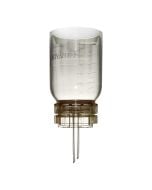
To ensure microbial cells are retained on the membrane surface, a vacuum filtration assembly is needed. This typically includes a Polysulfone Filter Holder, KP 47 H fitted with a #8B stopper, paired with a Borosilicate Glass Filter Flask, 125 ml with side-arm.
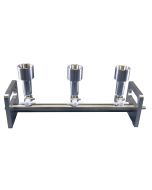
It is recommended to use an autoclavable plastic material like Polysulfone, as it can withstand autoclave conditions of 121°C, 20min at 15 psi. When processing multiple samples, the use of an autoclavable Stainless Steel Vacuum Manifold, 3-Position, Standard Cup, 3-Way Valve, KM3NV is ideal for a streamlined workflow. Stainless steel is an ideal material for this application due to its ability to be easily sterilized by autoclaving or flame, making it a practical option for durability and repeated use.
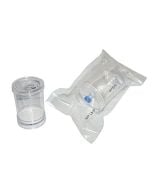
Some workflows will also utilize Disposable Filter Funnel, Sterile, 100 ml, Gridded, White, 0.45 Micron, 50/pk, which combines a petri dish, filter funnel and membrane in one pre-assembled kit.
This eliminates the need to wash and sterilize the funnel and filter holder, making it easier for laboratories to perform multiple samples. After filtration, the base of the holder can be used as a petri dish where the growth media or agar can be poured to then be incubated.
Using membrane filtration as a sample preparation technique prior to incubation has streamlined the process of Bioburden testing to ensure that laboratory test results acquired are completed efficiently without compromising data quality.