
Enhancing eDNA Analysis with High-Binding Membranes
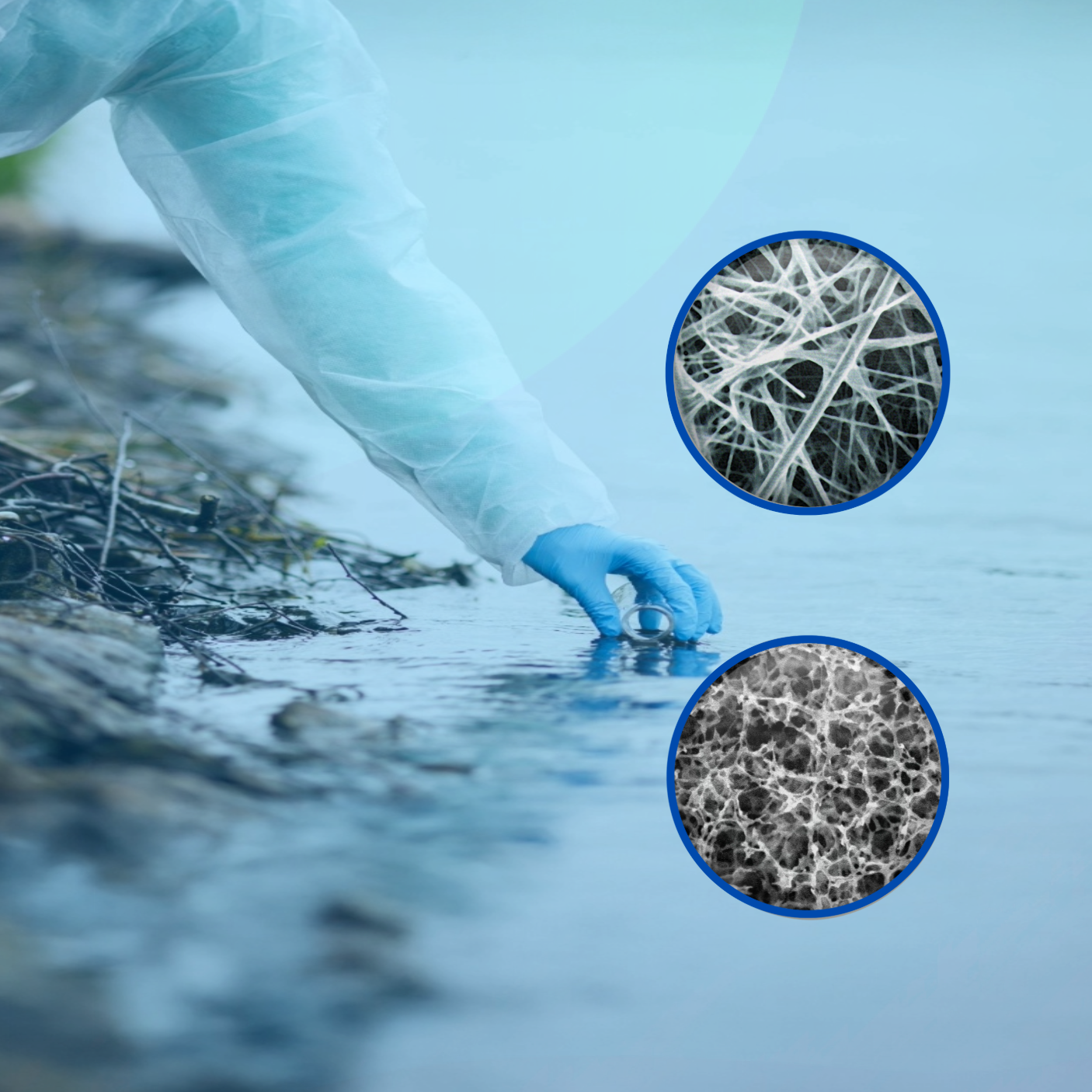
Biodiversity is a key indicator of environmental health. How dispersed and varied species are in each ecosystem is a good way for scientists to map different environmental factors that signal how an ecosystem reacts to changes brought about by human activity, climate change, or invasive species1.
The main challenge in evaluating biodiversity lies in the time-consuming and labor-intensive process of sampling the many interacting populations of plants, animals, and other organisms within an ecosystem.
Scientists have developed several practical ways to collect environmental DNA (eDNA) that reveal a complete picture of biodiversity. A single sample can now reveal the biodiversity of an entire ecosystem, with methods involving the collection of permafrost, soil, air, and aquatic samples, from which eDNA is captured through filtration2.
Filtration of these samples use high binding membrane materials such as MCE Sterile Membrane Filters and Glass Fiber Membrane Filters high binding membranes retain DNA within the membrane depth; these bound DNA samples can then be preserved or extracted on-site and analyzed to screen DNA fragments and identify species biodiversity from the sample.

Image 1. DNA is trapped within the membrane while the water sample passes freely through the membrane pores
High binding materials have an inherent affinity to biomolecules that cause these molecules to adhere to the membrane and not be flushed during subsequent filtration steps. DNA can be recovered by post-filtration for analysis.
Sampling eDNA using Microfiltration
A straightforward technique in sampling [KM1] eDNA is by collecting the environmental sample (air, soil, water) from the source and filtering these materials through a Glass Fiber or MCE Membrane. Prefiltration is also recommended for samples that contain high particle load to ensure that the DNA samples recovered from the environment will be free from unwanted particles. The membranes will then be recovered using DNA extraction kits for post-filtration analysis.

eDNA recovery is streamlined by using Sterlitech Membrane Filters and Vacuum Filtration Assembly.
References:
1. Cortez, T.; Torres, A.; Guimarães, M.; Pinheiro, H.; Cabral, M.; Zielinsky, G.; Pereira, C.; de Castro, G.; Guerreiro, L.; Americo, J.; et al. Insights into the Representativeness of Biodiversity Assessment in Large Reservoir through eDNA Metabarcoding. PLoS ONE 2025, 20, e0314210
2. Ding L, Duan X, Liu M, Chen D, Huang X, Wang D, Ma B, Fu S, Zhong L. Passive eDNA Sampling Characterizes Fish Community Assembly in the Lancang River of Yunnan, China. Biology. 2025; 14(8):1080. https://doi.org/10.3390/biology14081080


