Efficient Matrix Digestion for Accurate Trace Heavy Metals Detection
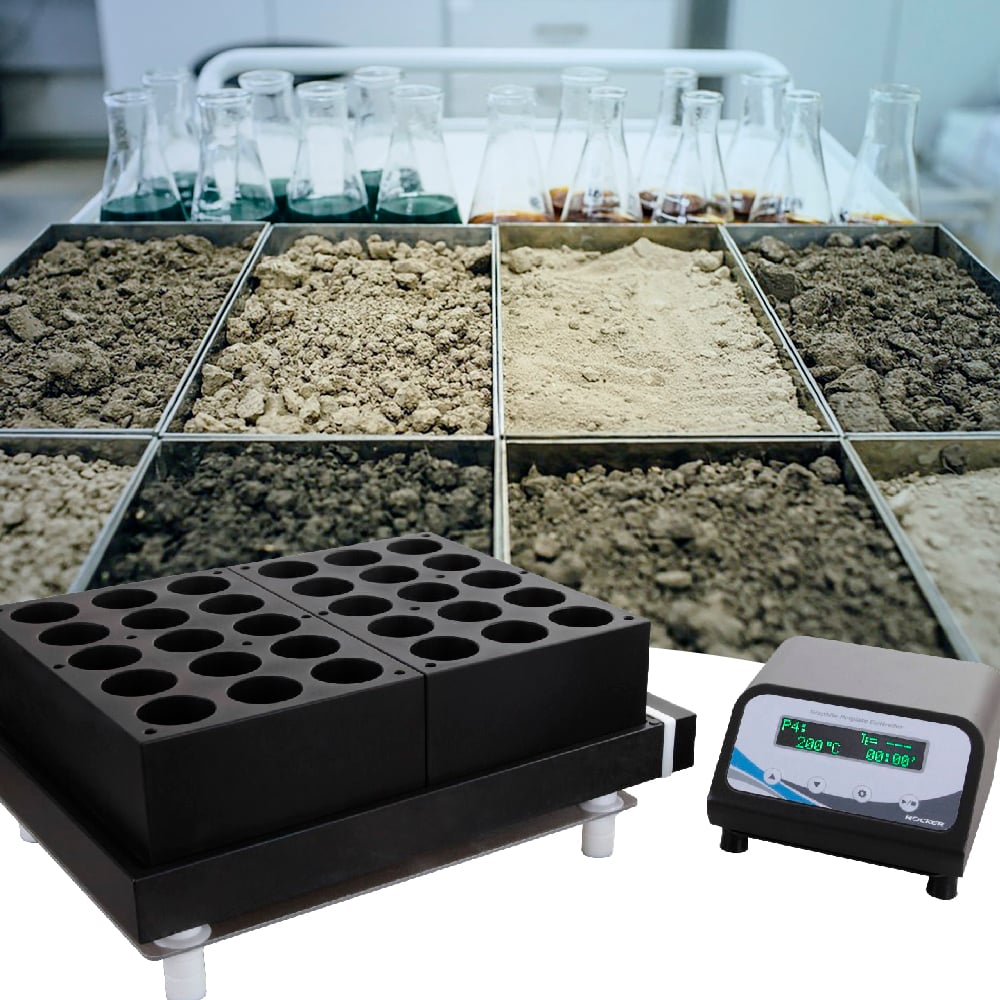
Soils associated with industrial operations such as landfills, manufacturing facilities, and the intensive use of agricultural chemicals can be prone to heavy metal accumulation.
Toxic heavy metals such as lead, arsenic, cadmium, and mercury can accumulate in soil, where they are absorbed by crops and plants. As a result, consumption of these crops inevitably leads to heavy metal exposure1.
Determining soil health and compatibility for plant growth and animal grazing is an important step to ensure heavy metals do not bioaccumulate. Two ways to determine heavy metal contents in soil are the use of analytical spectroscopy techniques such as Atomic Absorption Spectroscopy (AAS) and Inductively Coupled Plasma (ICP). These techniques analyze heavy metals suspended in aqueous solution and have very sensitive detection limits.
To ensure separation of heavy metals in complicated matrices such as soil and other soil constituents, a digestion step is required before spectroscopy. Soil samples are subjected to boiling temperature of 95 °C ± 5 °C using strong oxidizers such as Nitric Acid, Hydrochloric Acid and 30% Hydrogen Peroxide (US EPA Method 3050 B)2. Volatilization of oxidizing agents can corrode metallic surfaces; thus, acid and peroxide digestions require caution when using metallic or ceramic heating blocks with metal components.
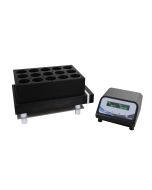
The Mars 320 Graphite Hotplate is a laboratory heating device specifically designed for acid digestion in environmental testing. Its graphite heating block provides uniform heat distribution and excellent chemical resistance, making it ideal for harsh digestion conditions. Due to the precise temperature control, it allows users to set and maintain the exact temperature required for digestion protocols, over digestion and sample loss from effervescence and overboiling is prevented. Stable heating ensures each sample is subjected to the same temperature conditions. This is crucial for consistent results and accuracy when doing batch analysis.
Compatibility with Digestion Vessels: The design incorporates a graphite block capable of holding multiple sample tubes or vessels, enabling laboratories to increase throughput by digesting several samples simultaneously. The graphite block is typically removable and interchangeable to accommodate different tube sizes and capacities

. 
Robust Construction and Safety Features: Built with corrosion-resistant materials (graphite and coated housing), the Mars 320 Graphite Hotplate withstands acidic fumes and spills. It includes safety measures such as over-temperature protection and thermal insulation to protect users and maintain safe operation.
Streamlining heavy metal analysis with consistent digestion and resistance to corrosive chemicals, the Mars 320 Graphite Hotplate is ideal for soil testing and regulatory compliance in drinking water. It boosts throughput, ensures reliable results, and promotes a safer lab environment, making it a trusted choice for demanding screening program.
References:
- Witkowska D, Słowik J, Chilicka K. Heavy Metals and Human Health: Possible Exposure Pathways and the Competition for Protein Binding Sites. Molecules. 2021 Oct 7;26(19):6060. doi: 10.3390/molecules26196060. PMID: 34641604; PMCID: PMC8511997.
- EPA Method 3050B – Acid Digestion of Sediments, Sludges, and Soils. U.S. Environmental Protection Agency