
Electrical conductivity and its importance in membrane separation processes
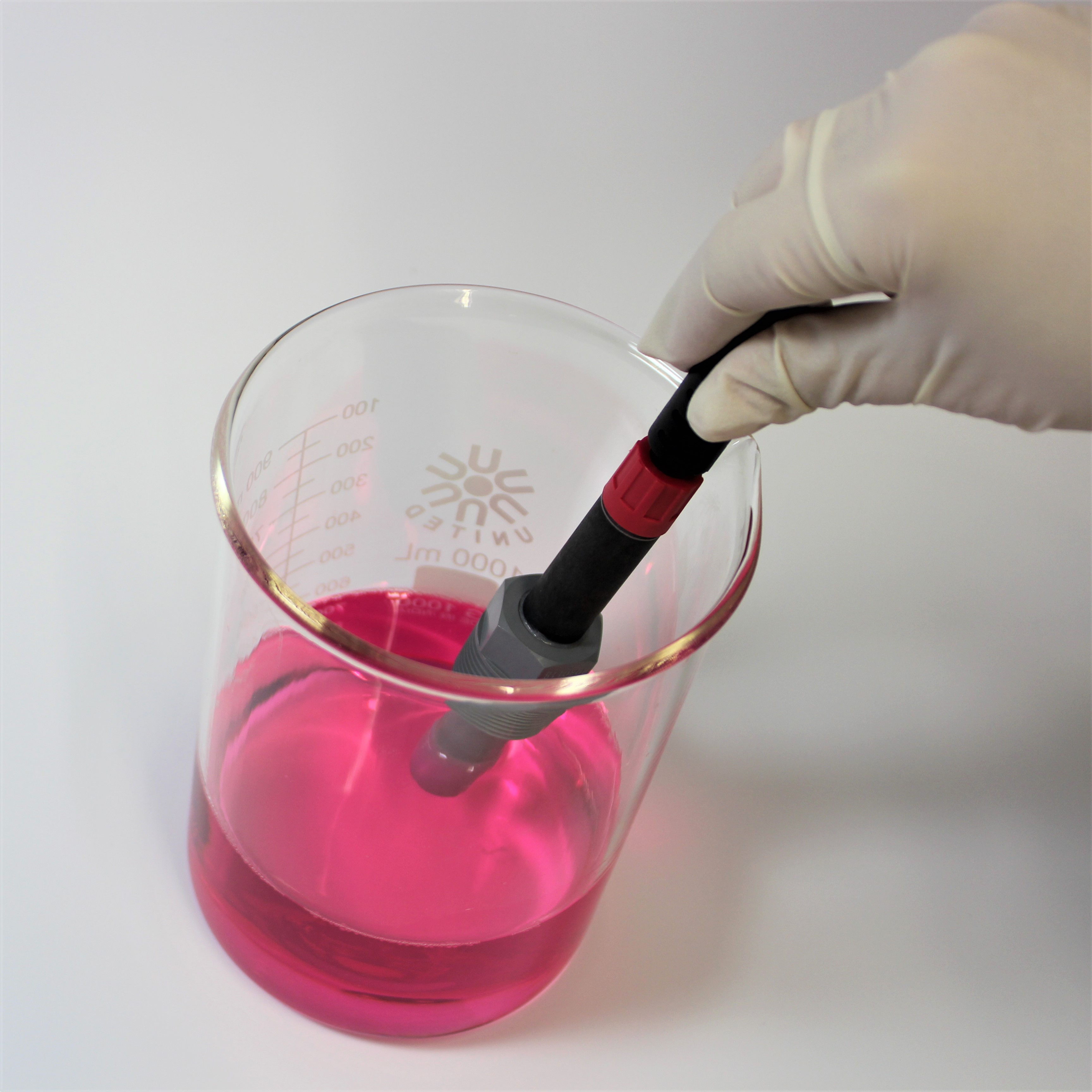
Electrical Conductivity is the ability of a solution to pass an electrical current. All ions present in a solution contribute to the conductivity measurement. How well a solution conducts electricity depends on several factors such as concentration, mobility and valence of the ions present.
Electrical conductivity measurement using digital conductivity probes is generally a reliable, sensitive and low-cost method. Surveillance of feed, permeate and reject quality and estimation of the total number of ions in a solution in the membrane filtration systems can all be performed using online and real time conductivity measurement techniques.
Unit of Measurement for Electrical Conductivity
The unit of measurement for electrical conductivity is commonly used as one millionth of a Siemens per centimeter (micro-siemens per centimeter or µS/cm). When measuring more concentrated solutions, the units are expressed as milli-siemens/cm (mS/cm). For ease of expression, 1000 µS/cm are equal to 1 mS/cm.
Electrical conductivity is the reciprocal of electrical resistivity and prior to introducing the siemens per meter as the conductivity unit, mho/cm was used to measure the conductivity, where the unit “mho” is a reciprocal ohm.
Estimating total dissolved solids from conductivity
Total dissolved solids (TDS), the measure of the total concentration of ionic species of a sample correlates to electrical conductivity and can be approximated with conductivity using calculation below;
TDS = EC * K
where:
TDS = Total Dissolved Solids in mg/L
EC = Electrical conductivity in µS/cm
K: TDS conversion constant which may varies within 0.5 to 0.70. A conversion constant of 0.5 can be applied for water samples containing NaCl and a conversion constant of 0.67 can be applied for natural waters.
TDS factor for a solution can also be calculated using the relationship between the TDS and conductivity of a standard solution (STD) as follows:
TDS factor=TDS STD/Conductivity STD
Table below shows the conductivity of water samples from different sources. TDS values are calculated using the equation above.
Table of Aqueous Conductivity
| Solution | µS/cm |
| Pure Water | 0.055 |
| Typical DI water | 0.1 |
| Distilled water | 0.5 |
| Drinking Water | 500-800 |
| Potable Water (max) | 1055 |
| Sea Water | 56000 |
| 1 mol/l NaCl | 85000 |
Using Conductivity Measurements to Investigate Membrane Performance
Measuring conductivity of feed solution, and permanent can be used to estimate the salt rejection values in the membrane filtrations systems:
Formula: R = Cf-Cp/Cf
Cf: Feed conductivity
Pc: Permeate conductivity
R= Rejection
Reminder: if your solutions is composed of several ions, Na, Ca, CL etc, conductivity measurements correlate to the total concentration of ions.
Looking for remote or in-line conductivity probes for your lab setup? Contact us to assist you finding the right products.


