
Crossflow and Tangential Flow Filtration: Are They Really Different?
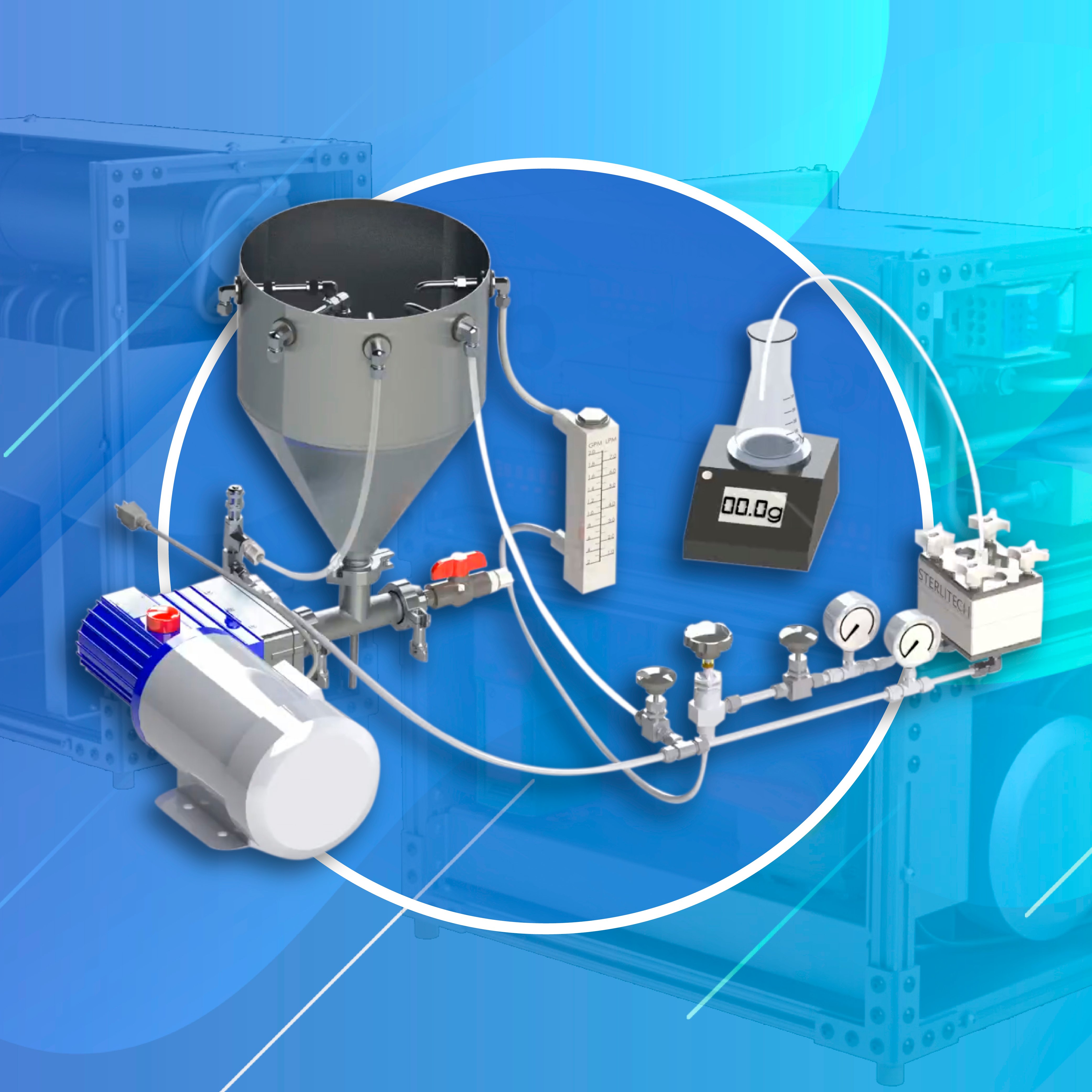
Crossflow Filtration (CFF) and Tangential Flow Filtration (TFF) describe a highly efficient method used across membrane-based separation workflows. Although the terms may vary by industry, the process is the same: fluid flows tangentially across a membrane surface, allowing smaller molecules to pass through while larger particles are retained and swept along the surface.
What Is Crossflow/Tangential Flow Filtration?
In CFF/TFF, the liquid stream moves parallel to the membrane surface. This tangential motion continuously displaces retained solids, allowing the system to maintain performance and reduce fouling over time.
CFF and TFF are foundational in applications that involve concentration, clarification, and fractionation of complex mixtures. The method is especially well-suited for samples that are sensitive, viscous, or particulate-rich.
CFF vs TFF: What’s the Difference?
The terms Crossflow Filtration and Tangential Flow Filtration are often used interchangeably, but their usage typically aligns with industry norms:
- Crossflow Filtration (CFF) is more commonly used in the environmental, industrial, and food and beverage sectors where workflows often involve liquid clarification or particulate separation at scale. The term aligns with the language typically used in process and engineering applications.
- Tangential Flow Filtration (TFF) is predominantly used in the biotech and pharmaceutical industries, where the term is well-established in scientific literature and regulatory standards. It is widely applied in protein purification, virus filtration, and cell harvesting processes.
Key Benefits of CFF and TFF
- Minimized Fouling: Tangential flow clears particles from the membrane, reducing clogging
- High Product Recovery: Valuable components stay in circulation, minimizing loss.
- Efficient Concentration: Ideal for buffer exchange, desalting, and volume reduction.
- Flexible and Scalable: Easily adapts from lab to full-scale production.
Crossflow Filtration System Components
A typical crossflow setup includes:
- Feed reservoir
- Pump (often peristaltic for gentle sample handling)
- Membrane (flat sheet membranes, cartridges, hollow fiber, or spiral-wound elements)
- Tubing and valves to direct permeate and retentate
Sterlitech offers a wide range of crossflow filtration equipment, including modular TFF systems that integrate easily with existing lab and pilot-scale workflows.
Industries that Crossflow/Tangential Flow Filtration is widely used in:
- Biotechnology and Pharmaceuticals: Concentration of therapeutic proteins, antibody purification, virus filtration
- Food and Beverage: Clarification of juices and broths, concentration of enzymes and flavor compounds
- Environmental and Water Testing: Microbial concentration, particulate separation from large water samples
- Industrial and Materials Processing: Colloid separation, catalyst recovery, particle fractionation
Crossflow filtration offers powerful advantages for a wide range of separation and purification applications. It improves sample yield, reduces maintenance, and scales easily as process demands increase. Whether you are purifying proteins in research settings or clarifying enzymes, CFF and TFF can streamline your workflow and ensure high-quality results.


