
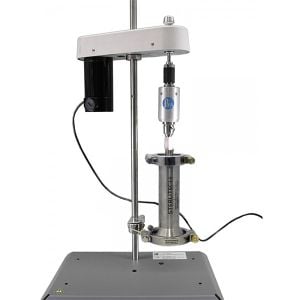
Sterlitech HP4750 High Pressure Stirred Cell Kit, Includes Cell, Regulator, Bleed Valve, High Pressure Hose, Mechanical Stirrer with 316 Stainless Stir Bar and Shaft (230V)
 Powered by Bioz
Unique Design: The top of the cell is easily removed to fill the vessel with up to 300 mL of solution. The bottom is removable for easy membrane change-out. The design enables low hold-up volume of 1mL to prevent waste of valuable solutions.
High Pressure Operations: The HP4750 (X)Stirred Cell can complete a variety of separations from microfiltration to reverse osmosis. The standard cell is designed for safe operation to 69bar (1000psig) (HP4750X: 172 bar (2500 psig)).
Inert Gas Pressure Source: Standard sources of compressed air or inert gas allow variable, safe, and consistent supply of pressure to perform separations. Volatile solutions can be processed safely because of HP4750(X) Stirred Cell does not require a pump to supply operating pressure. Pressure regulators and relief valves are available from Sterlitech.
Mechanical Stirring Mechanism: Sterlitech can provide an optional mechanical stirrer to be used with the HP4750 (X).
Accepts Standard Membrane Disks: HP4750 (X) Stirred Cell accommodates any 47-50 mm diameter membrane disk. For convenience, Sterlitech offers precut and packaged membranes in single type or assortment packs, from a wide selection of RO, NF, UF, MF, FO, OSN, and MD membranes.
Autoclavable: All components are fully autoclavable and sterilizable.
|
|
|
|
|
|---|---|---|---|
| Membrane Size | 1.93 in dia. nominal (49 mm) | 1.93 in dia. nominal (49 mm) | 1.93 in dia. nominal (49 mm) |
| Active Membrane Area | 2.26 in2 (14.6 cm2) | 2.26 in2 (14.6 cm2) | 2.26 in2 (14.6 cm2) |
| Processing Volume | Up to 300 mL | Up to 300 mL | Up to 300 mL |
| Hold-Up Volume | 1 mL | 1 mL | 1 mL |
Max Pressure |
1000 psig (69 bar) w/high-pressure clamps | 2500 psig (172 bar) | 2500 psig (172 bar) |
Max Temp |
250 °F (121 °C) at 800 psig (55 bar) | 400 °F (205 °C) at 2000 psig (138 bar) | 400 °F (205 °C) at 2000 psig (138 bar) |
| pH Range | Membrane Dependent | Membrane Dependent | Membrane Dependent |
| Connections | Permeate Outlet: ⅛ in dia. 316L SS tubing; Pressure Inlet: ¼ in FNPT |
Permeate Outlet: ⅛ in dia. 316L SS tubing; Pressure Inlet: ¼ in FNPT |
Permeate Outlet: Hastelloy™ (C-276); Pressure Inlet: ¼ in FNPT |
Cell Body |
316L Stainless Steel | 316L Stainless Steel | Hastelloy™ (C-276) |
O-Rings |
Buna-N, others available as options | Viton or PTFE | Viton or PTFE |
Gasket |
Buna-N, others available as options | Viton or PTFE | Viton or PTFE |
Stir Bar |
PTFE | PTFE | PTFE / Hastelloy Components |
Cell Diameter |
2.0 in (5.1 cm) | 2.75 in (7.0 cm) | 2.75 in (7.0 cm) |
Cell Height |
7.8 in (19.9 cm) | 10 in (22.4 cm) | 10 in (22.4 cm) |
Cell Width |
5.7 in (14.6 cm) w/high-pressure couplings | NA | NA |


Cross/tangential flow test cells are typically used in membrane applications such as :
- Membrane test and quality assurance
- Biological or biopharmaceutical processing
- Concentration of fruit juices and extracts
- Food and beverage processing
- Desalination of brackish water or seawater
- Purification of rinse water in electroplating tanks
- Municipal or industrial water and wastewater purification

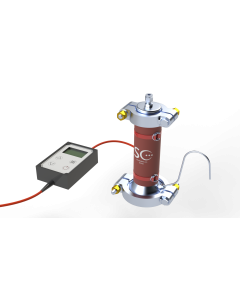
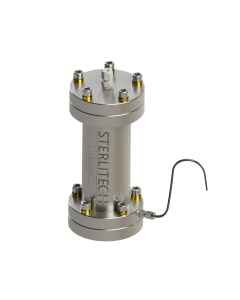
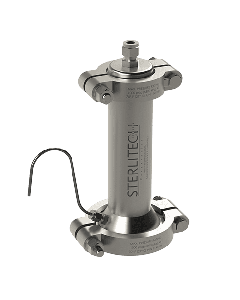
Check out other related products below!


 Frequently Asked Questions
Q: I have a membrane sample that is too large to fit in my stirred cell. Can I cut it to fit?
Yes—flat sheet membranes can be cut to fit your stirred cell. For best results, use the stirred cell support disk as a template to trace the correct size, then cut the membrane carefully to match.
Q: What type of stir plate do you recommend for use with the stirred cells?
Any standard magnetic stir plate will work with Sterlitech stirred cells. Sterlitech recommends the Jeiotech TS-18QG Hotplate & Magnetic Stirrer (Digital, 180 mm) because the large 180 mm plate provides a stable base for stirred cells, and the digital speed control ensures precise, repeatable stirring performance during membrane filtration testing.
Q: Can I use the aluminum oxide (AO) membrane disk filters in the stirred cells?
Yes, you can use the AO membrane disc filters in the stirred cells. These disk filters are very brittle and must be handled with an abundance of care to avoid breakage. Use membrane tweezers to carefully place the disk filter on the surface of the support disk and then install the support disk in the stirred cell body.
Q: Can I use microfiltration membrane disk filters in the stirred cells?
Yes, you can use almost all microfiltration membrane disk filters in the stirred cells. The only exception are the ceramic membrane disk filters; these are too thick to fit in the stirred cells.
Q: What do I need to operate a stirred cell?
You can find a diagram for a typical stirred cell system at https://www.sterlitech.com/media/wysiwyg/Manual/HP4750_Flow_Diagram.png. In addition to the stirred cell itself, the user will require a pressure source consisting of a regulated supply of compressed inert gas or air, a bleed valve for releasing the air pressure, an appropriately sized magnetic stirring plate, and a permeate collection vessel (e.g. flask or beaker) to collect the filtrate.
Q: Do I need to precondition the membrane disk used in a stirred cell?
Yes, for flat sheet membranes that will be used with water or aqueous solutions, we recommend that you pre-condition the membranes prior to conducting your separation experiments. Pre-conditioning helps ensure that the membranes perform as expected. Also, pre-conditioning removes preservatives and other residuals from the membranes.
To pre-condition the membrane disk, install it in the stirred cell and then fill the stirred cell with purified deionized water. Initiate operation of the stirred cell at the pressure and temperature expected for the separation experiments. Allow the cell to operate until the permeate flux has stabilized at an expected value. Then release the pressure, discard any water remaining in the stirred cell, and discard the water from the permeate collection vessel. You may now proceed with your experiments by refilling the cell with the desired feed sample. At no time should the wetted membrane disk be allowed to dry.
Q: Do you have operating manuals for the stirred cells?
Yes, we offer operating manuals for the HP4750, HP4750X, UHP polymeric stirred cells. You can find links to the operating manuals for the stirred cells by clicking on the “Documention/Media” tab on the stirred cell product pages.
Q: Why am I not achieving the membrane manufacturer’s published rejection and/or permeate flux while using my stirred cell?
It is important to note that membrane manufacturer’s specifications for rejection and permeate flux are usually based on testing of large area spiral wound membrane elements operating in crossflow mode using standardized feed streams and pressures. It is normal, and to be expected, that rejection and permeate flux will be different for feed streams and pressures that are not similar to the standardized test conditions. It is also normal, and to be expected, that rejection and permeate flux will have greater variability from published specifications for devices with membrane active areas that are very much smaller than spiral wound elements, such as stirred cells. Some amount of concentration buildup in the feed for stirred cells is inevitable and this may affect rejection and permeate flux.
There are some tactics that can be used to optimize rejection and permeate flow while using stirred cells. First, the membrane should be pre-conditioned using purified deionized water. Please refer to the operating manual for the pre-conditioning procedure. Second, make sure that the stir bar is turning properly and at an appropriate rate. Third, the operating pressure should correspond to the membrane manufacturer’s recommended pressure. Finally, you may want to stop your experiments while there is still some feed liquid remaining in the stirred cell to mitigate effects associated with increasing concentrations.
Q: Can I attach the stirred cell permeate line directly to an HPLC analyzer or other laboratory instruments?
Yes, you may connect the permeate line directly to an instrument. However, it is important to understand that if the membrane fails or is allowed to dry, then the full feed pressure may be applied to the permeate line. If the instrument cannot withstand the feed pressure, then directly connecting the permeate line is not recommended. Alternatively, if the membrane becomes prematurely fouled (due to a high TDS or particulate loading), permeate levels may drop below detection in the HPLC inlet port.
Q: What is the maximum membrane thickness for the stirred cells?
The stirred cells are designed to accept flat sheet membranes with thickness of 350 microns or less.
Q: What is the pore size rating for the porous support disc (SKU 1114910)?
The porous support disk has a nominal pore size of 20µm.
Q: Why is the flat sheet membrane I'm using measuring a flux value less than the published flux value?
Flow characteristics for a spiral element and flat sheet membrane are significantly different and are really only comparable on a qualitative basis. Variability in the membrane manufacturing process, differences in water composition, test procedures, and test equipment, used in a factory, laboratory, or elsewhere, will impact water flux results.
Reference: Understanding Variation of Experimental Flux and Rejection
Q: What are the materials of construction for the HP4750 stirred cell?
The HP4750 stirred cell is composed of 316 stainless steel, but is also available in Hastelloy C-276 for highly corrosive environments. The magnetic stir bar is PTFE coated to prevent corrosion and to ensure broad chemical compatibility. The standard seals are composed of Buna-N; other seal elastomers are optionally available.
Q: What is the maximum operating pressure for the HP4750 stirred cell?
The maximum operating pressure for the HP4750 stirred cell is 1000psi (69bar) at room temperature. However, the actual maximum operating pressure may be limited by the membrane being used.
Q: What is the maximum operating temperature for the HP4750 stirred cell?
The maximum operating temperature for the HP4750 stirred cell itself is 250°F (121°C) at ≤800psi (55bar). However, the actual maximum operating temperature may be limited by the seal elastomer or by the membrane being used.
Q: What is the correct membrane disk diameter for the HP4750 stirred cell?
The HP4750 stirred cell will accept a membrane disk of 47mm to 49mm in diameter.
Q: Can I use a membrane disk smaller than 47mm in the HP4750 stirred cell?
Sterlitech offers an adapter that allows 25mm membrane discs to be used in the HP4750 stirred cell. Membrane discs with other diameters typically cannot be used. However, some users have been able to accommodate other diameters in low pressure applications by blanking the unoccupied area with an appropriately sized annular flat gasket. Please contact us if you desire to use smaller disks in the HP4750 as we may be able to provide some assistance.
Q: Can I use the 47mm ceramic membrane disk filters in the HP4750 stirred cell?
No, the ceramic membrane disk filters are too thick to fit in the HP4750 stirred cell. Although not recommended by Sterlitech, some users have reported being able to close and operate the HP4750 stirred cell by replacing the support disk with a 47mm ceramic membrane disk filter. However, success was almost always limited to low pressure use and physical damage to the disk filters was very common.
Q: What is the active membrane area on the HP4750 Membrane Area Reducer?
Q: What is the active membrane area on the HP4750 Membrane Area Reducer?
A: The adaptor is used with a 25 mm membrane disc however, the membrane active area is approximately 323 mm2.
Q: Can I use 25 mm ceramic discs with HP4750 Membrane Area Reducer?
Q: Can I use 25 mm ceramic discs with HP4750 Membrane Area Reducer?
A: No, the ceramic membrane disk filters are too thick to fit in the HP4750 Membrane Area Reducer. Although not recommended by Sterlitech, some users have reported being able to close and operate the HP4750 stirred cell by replacing the support disk with a 25 mm ceramic membrane disk filter. However, success was almost always limited to low pressure use and physical damage to the disk filters was very common.
Q: What are the differences between the HP4750X stirred cell and the HP4750 stirred cell?
The HP4750X stirred cell has been designed to operate at higher pressures (up to 2500psi) and higher temperatures (up to 400F) than the HP4750 stirred cell. The top and bottom caps for the HP4750X cell are secured via high-strenght bolts, the standard HP4750 uses a clamp assembly to secure the caps. In addition, the standard seal elastomer for the HP4750X is Viton.
Q: Is there a mechanical stirrer option for the HP4750 stirred cell?
Yes, there is a mechanical stirring option for the HP4750 stirred cell. The mechanical stirrer is available with either a 110V or 230V rated motor. Please note that the shaft adapter of the mechanical stirrer occupies the 1/4” FNPT pressure port in the stirred cell top and has a 1/8” FNPT pressure port.
Q: Why would I use the mechanical stirrer for the HP4750 stirred cell?
The mechanical stirrer (https://www.sterlitech.com/mechanical-stirrer-with-stir-bar-and-shaft-1144035-110.html) is typically used for processing fluids with high viscosities that would stall a magnetic stir bar.
Q: I need to replace the Swagelok compression fittings on my HP4750 stirred cell. What are the thread sizes for the ports?
The pressure port in the top of the HP4750 stirred cell has 1/4” NPT female threads. If the mechanical stirrer is being used, the pressure port in the shaft adapter has 1/8” NPT female threads.
The permeate port in the body of the HP4750 stirred cell has 1/8” NPT female threads.
If you would prefer to source the Swagelok fittings from Sterlitech, please contact us for pricing and availability.
Q: I’m purchasing the high-pressure gas regulator assembly (SKU 1144026) for use outside of the United States. Will I need a conversion kit to attach it to my gas cylinder?
The high pressure gas regulator assembly is supplied with a CGA 580 fitting, common in North America for use with commercial inert gas cylinders. Sterlitech also offers an optional DIN 10 fitting (https://www.sterlitech.com/pressure-regulator-conversion-kit-din-10-assembly-1-4-nptm.html) for use in numerous European countries. If the CGA 580 fitting or DIN 10 fitting are not suitable, please contact your local specialty compressed gas supplier for an appropriate fitting that is compatible with the North American ¼” NPT female threads of the Sterlitech regulator ports.
Q: What is the application of pressure bleed valve in HP4750 stirred cell?
This is a valve that installed in the stirred cell assembly to decrease the operating pressure of the HP4750 as well as depressurizing the cell after each experiment to unassembled the unit. For more information regarding the pressure bleed valve and the best practice to operate the stirred cell, please refer to the following user manual.
Q: How do I release the pressure on a stirred cell?
The user must completely release the pressure before opening a stirred cell. The HP4750 and HP4750X stirred cells do not have integrated pressure relief valves, but Sterlitech does offer an accessory bleed valve for purchase which can be attached to the regulator's outlet to the high pressure hose upstream of the stirred cell. https://www.sterlitech.com/pressure-relief-bleed-valve-2500-psig-1155893.html . The bleed valve can be slowly opened to release pressure when necessary for sample removal or refilling.
The polymeric stirred cells have integrated pressure relief valves. These valves can simply be opened to release the pressure when necessary.
Q: What are the differences between the crossflow test cells and the Sterlitech HP4750 stirred cell?
Sterlitech crossflow test cells (Sepa® CF, CF042, and CF016) operate in true crossflow filtration mode, meaning the feed flows tangentially across the membrane and produces both a permeate stream and a concentrate (retentate) stream. These systems allow continuous operation, with user-controlled pressure and crossflow rate, and enable ongoing sampling from both streams during testing.
The HP4750 Stirred Cell, by comparison, is a sealed batch filtration device (up to 300 mL feed volume) typically pressurized with compressed gas. It runs in normal-flow (dead-end) mode and does not have a concentrate stream. A stir bar helps reduce concentration polarization and simulates crossflow-like mixing at the membrane surface, but it is not true crossflow.
