Explore our new PFAS-Free products designed specifically for PFAS testing!

Synder Flat Sheet Membrane, FR, PVDF, MF, CF042, 5/Pk

Add to Wish List
YMFR4205
Synder
FR
PVDF
CF042
5
5-7 days

MF Flat-Sheet Performance Comparison by Manufacturer:


Series

Synder FR

Synder FR

Synder V0.1

Synder V0.1

Synder V0.2

Synder V0.2

GE  JX

GE  JX

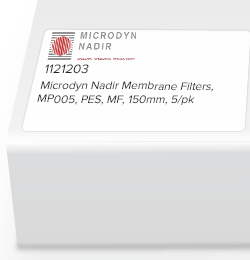
MP005

MP005

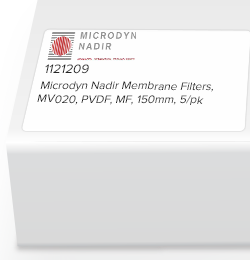
MV020

MV020

Feed Industrial/Dairy Industrial/Dairy Industrial/Dairy Industrial/Process Environment, metal, textile, paper, food, pharma/biotech, chemical Environment, paint, paper, metal, chemical, pharma/biotech
Type "Tight", Fat/Microbial Removal, Protein Fractionation "Intermediate", Fat/Microbial Removal, Protein Frationation "Open", Fat/Microbial Removal, Protein Fractionation Stream Calrification "Hydrophilic, high chemical resistance" High stability against oxidizing agents
pH Range (25°C) 1-11 1-11 1-11 1-11 0 to 14 2 to 11
Flux (GFD)/psi 421-495/30 486-720/60 501-770/60 130/30 177/14.5 412/14.5
Pore size/ MWCO 800,000 Da 0.1 µm 0.2 µm 0.3 µm 0.05 µm 0.2 µm
Polymer PVDF PVDF PVDF PVDF PES PVDF


Back to Top

Applications

  • Cell harvesting
  • Lysate Clarification
  • Oil/Water Separations
  • RO/NF Pretreatment
  • Suspended Solids Removal

Check out other related products below!

More Choices:

Frequently Asked Questions

Yes—flat sheet membranes can be cut to fit your stirred cell. For best results, use the stirred cell support disk as a template to trace the correct size, then cut the membrane carefully to match.

Yes, we can supply the flat sheet membranes in the correct disk size for your stirred cell. Please contact us at [email protected] for pricing and availability.

Used flat sheet crossflow membranes must be stored wet at all times. If a membrane is allowed to dry out, it can irreversibly lose water permeability and performance.

For storage, place the membrane fully submerged in one of the following solutions:
0.5% formaldehyde solution (helps prevent microbial growth)
1.0% sodium metabisulfite (SMBS) solution -- Replace the SMBS solution monthly to maintain effectiveness

UPDI water (ultrapure deionized water)--Replace the water weekly to reduce contamination and biofouling

Yes, we are able to offer some of the flat sheet membranes as roll stock. Please contact us at [email protected] to inquire about pricing and availability.

Flow characteristics for a spiral element and flat sheet membrane are significantly different and are really only comparable on a qualitative basis. Variability in the membrane manufacturing process, differences in water composition, test procedures, and test equipment, used in a factory, laboratory, or elsewhere, will impact water flux results.

Reference: Understanding Variation of Experimental Flux and Rejection

We do not offer complimentary samples of the flat sheet crossflow membranes. However, most customers find the standard pack quantities to be quite reasonable for initial evaluations. For customers that want to evaluate several different membranes, we do offer custom variety packs. And, in some instances, we may be able to offer custom packs containing smaller sheet quantities. Please contact us to inquire about pricing and availability.

Sterlitech flat sheet crossflow membranes should be stored sealed in the original packaging in a climate-controlled environment, protected from direct light, heat, and temperature extremes. While we recommend using membranes as soon as practical after receipt, most flat sheet membranes can typically be stored for up to one (1) year without affecting performance when stored properly.

Some manufacturers supply their membrane in wet to prevent the membrane from going dry. There is always moisture in these sealed bags and it is not uncommon for some condensation (droplets) to form.
Rinsing the membrane on both sides with a stream of clean water is sufficient to remove the preservative solution. There is no need to pre-condition.
Yes, you need to pre-wet the membranes. The best procedure is to place them in a dry holder and allow them to wet from the inlet side first. It may be best to perform this operation with water or a buffer, then dispose of the first rinse, and introduce the process fluid. This prevents any wetting agents or preservatives from mixing with the process solution.
Yes, you may attempt to reuse flat sheet membranes. However, you may find it difficult to achieve a leak free seal. The cell body o-rings necessarily compress the membrane during installation and the physical action of separating the membrane from the o-rings during removal may cause damage. This damage can impede that ability to achieve a leak free seal when the membrane is reused.
Unfortunately, allowing a previously wetted crossflow membrane to dry usually results in permanent reduction of water permeability. Nevertheless, you can attempt to re-wet the membrane and use it. First, soak the membrane in a 50% alcohol solution for at least 15min (ethanol, methanol, or IPA would be acceptable). Next, install the membrane in the test cell and operate the cell with purified deionized water as though you were pre-conditioning the membrane. After about 30min, the permeate flux should stabilize to whatever rate the membrane is now capable of.
Determining which solution to use to clean a flat sheet membrane depends on the substance it is fouled with. As a general rule, you can use a caustic or oxidant solution for organic fouling and an acidic solution for inorganic causes. Please remember that different membranes polymers have different pH tolerances.
Yes, for flat sheet membranes that will be used with water or aqueous solutions, we recommend that you pre-condition the membranes prior to conducting your separation experiments. Pre-conditioning helps ensure that the membranes perform as expected. Also, pre-conditioning removes preservatives and other residuals from the membranes. Purified deionized water is used to pre-condition the membranes. For all flat sheet membranes except the forward osmosis (FO) membranes, install the membrane in the test cell and apply the purified deionized water feed at the normal operating rate and pressure for the membrane. Allow the system to operate with the purified deionized water feed until the permeate flux stabilizes at an expected value. You can now replace the purified deionized water feed with your feed solution and begin your experiments.
Most membrane manufacturers recommend CFVs of 5 to 35cm/s for their spiral wound membrane elements. The flat sheet membranes can be operated in this range to simulate use in such elements. Additionally, the flat sheet membranes may be operated outside of this range by users that want to examine the relationship between CVF and fouling and membrane performance in their applications.
Cross flow velocity (CFV) is the linear velocity of the feed flow tangential to the membrane surface and is typically reported in m/sec or ft/sec. It is calculated by dividing the volumetric flow rate through the feed channel by the cross-sectional area of the feed channel. Please refer to the CFV article at Tech Tips for more information.
The recommended TMP will depend on the type of flat sheet membrane and on the application. Typically, a reasonable TMP will be the same as that noted for the permeate flux specification of the membrane. The specifications for any of the flat sheet membranes can be easily found on our website by clicking the “application/specification” tab on the product web page and scrolling down as necessary. Please contact us at [email protected] if you need additional assistance.
These membrane sizes are intended for use in the bench-scale crossflow test cells offered by Sterlitech. Please see the list of flat sheet membranes we offer and their dimensions: HP4750 Stirred Cell: 47 mm (1.85") discs, CF016 cell: 58 x 75 mm (2.26 x 2.95") coupons, CF042 cell: 56 x 115 mm (2.20 x 4.53") coupons, Sepa CF cell: 140 x 190 mm (5.51 x 7.48") coupons, CF047 circular cell: 47 mm discs, CF090 circular cell: 90 mm discs

Ask An Expert

As an industry leader focused in unique micro and sub-micron filtration products, our goal is to support our customers by keeping them at the forefront of their industries. We're here to help with any filtration questions you might have so you can transform your ideas into reality, and tackle those big science challenges. Feel free to reach out using the form below, our experts are ready to serve.