
Polyethylene Membranes for Bioreactor Venting: A Hydrophobic, PFAS-Free Option
· Filtration Resources
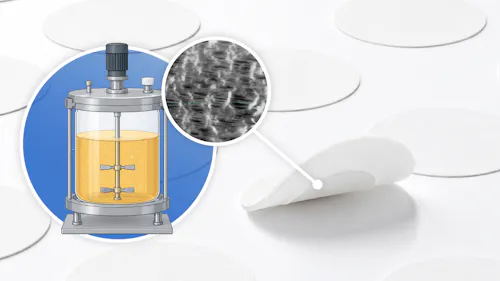
Bioreactors provide a controlled environment for microorganisms, cells, or enzymes to perform metabolic processes that produce byproducts typically used for food and pharmaceutical applications (1). Many familiar foods and beverages, including cheese, yogurt, beer, and wine, rely on ingredients or fermentation processes produced within these systems. Supporting these biological processes requires precise control of operating parameters such as temperature, pH, nutrient concentration, dissolved gases, and headspace pressure.
For alcoholic beverages, sugar-rich fruit juices are placed in a bioreactor to ferment. Sugars in the juice will be utilized by yeast, specifically Saccharomyces cerevisiae, to support its metabolic activity(2). One common byproduct of Saccharomyces metabolism is alcohol carried through the conversion of sugars in the form of glucose to ethanol (drinking alcohol) and releasing carbon dioxide gas in the process.
As carbon dioxide is generated, it can accumulate in the bioreactor headspace and must be removed to prevent excessive pressure buildup. Carbon dioxide concentration can also affect the pH of the culture medium to make the solution acidic, making controlled gas exchange an important part of maintaining stable process conditions.
Headspace volume and pressure can also change when substrates, buffers, or additional media are added. A venting system allows process-generated gases to escape while helping protect the bioreactor.
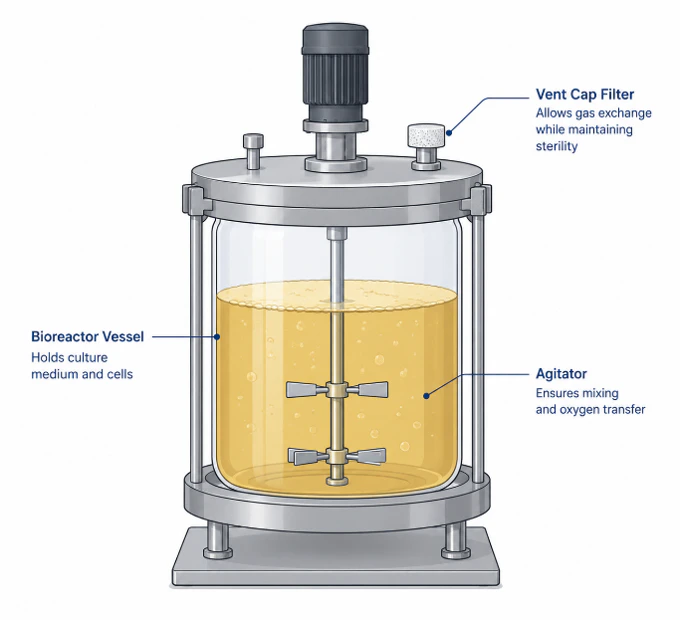
The membrane used in venting plays an important role in maintaining consistent gas exchange, pressure control, and process sterility. Selecting an appropriate membrane requires evaluating airflow, hydrophobicity, sterilization compatibility, thermal and chemical resistance, and microbial-retention requirements under operating conditions.
What to Look for in a Vent Membrane?
Sterilization Compatibility
Sterilizability needs to be considered due to the exchange of gases that occurs during the bioreactor process. To prevent external contamination typically requires starting with a sterile membrane or selecting a material that is compatible with the intended sterilization method.
Common methods of sterilization include gamma sterilization, ethylene oxide sterilization, or autoclaving. The material needs to be gamma compatible, with ideal chemical and thermal resistance.
Microbial Retention
Sterile venting applications commonly use a membrane with a pore size of 0.2 micron. However, when microbial retention is required, the completed vent-filter configuration should be validated using a bacterial challenge test method. Integrity tests such as bubble point testing may also be used to assess membrane integrity and confirm consistency with established specifications.
Thermal and Chemical Resistance
A vent membrane should maintain its integrity and functional performance across a wide range of temperatures. Membrane selection should also consider effects of temperature, pressure, chemical exposure, and sterilization rather than evaluating each condition independently.
Airflow at Low Differential Pressure
A vent membrane must allow gas flow at low differential pressure within the system. During bioreactor operation, gas buildup can increase internal pressure, which must be relieved quickly and consistently through venting.
A membrane that allows gases to pass through at lower pressure helps support smooth pressure control, reduces stress on the system, and promotes reliable gas evacuation without compromising performance.
Material Composition
Due to continuing concern around PFAS exposure, a good vent membrane is also ideally a no intentional PFAS added material.
Sterlitech offers Polyethylene membranes, an inherent hydrophobic material that is PFAS-free. Unlike PTFE, polyethylene is gamma compatible, making it a potential option for applications requiring gamma sterilization
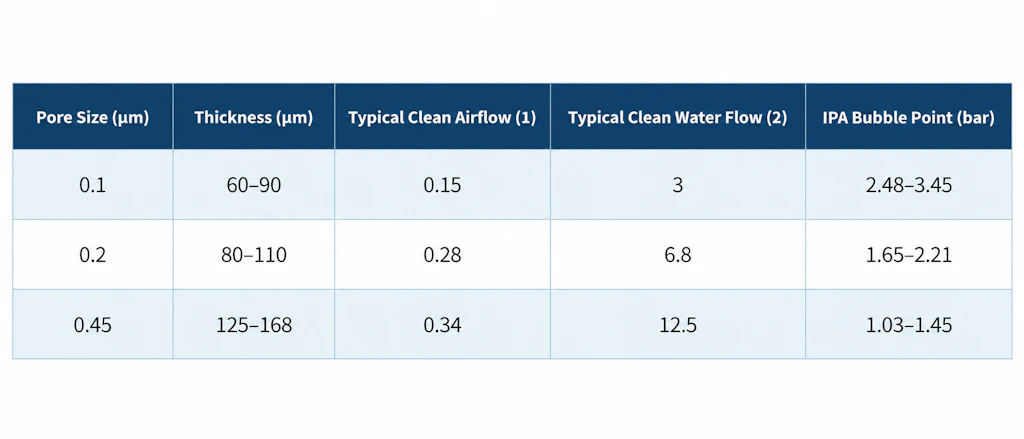
(1) L/min*cm2 @70 mBar; estimated assuming a linear relationship between volumetric flow and differential pressure
(2) mL/min*cm2 at 690 mbar; for properly wetted membrane filters
Selecting a Membrane for Reliable Bioreactor Venting
An effective bioreactor vent membrane should support efficient gas exchange, resist wetting in humid conditions, withstand sterilization methods, and maintain reliable airflow across operating conditions. As bioprocessing applications continue to move toward more sustainable material choices, no intentional PFAS added hydrophobic membranes such as polyethylene provides a practical option for sterile venting applications.
Need help selecting the right membrane for your bioreactor venting application? Contact us for guidance or explore our available polyethylene membrane options.
References: 1. Mojtaba Aghajani Delavar, Junye Wang, Chapter 7 - Bioreactor concepts, types, and modeling, Advanced Methods and Mathematical Modeling of Biofilms, Academic Press,2022, Pages 195-245, ISBN 9780323856904, https://doi.org/10.1016/B978-0-323-85690-4.00004-X.
2. Wang, Wei-Yang & Liang, Ling & Wang, Bei-Ping & Bi, Han-Si & Su, Hai-Song & Liao, Chun-Yan & Niu, Fu-Xing. (2023). Ethanol Synthesis by Saccharomyces cerevisiae: Summary, Discovery, and Prospects. 10.20944/preprints202305.0625.v1.