
Personalized mRNA Cancer Therapy Reaches a Phase 3 Milestone in Melanoma
· Emerging Technologies
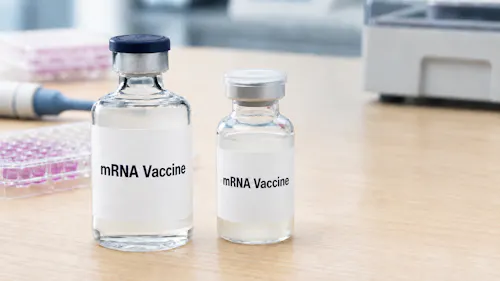
Messenger RNA technology is moving beyond infectious disease vaccines and into a new stage of cancer treatment development. Merck and Moderna have announced that intismeran autogene, an investigational individualized mRNA therapy, met key endpoints in a Phase 3 melanoma trial when combined with KEYTRUDA® (pembrolizumab).[1]
The result is significant because intismeran is not a standardized treatment made identically for every patient. Each therapy is designed from the mutations found in an individual patient’s tumor. The positive Phase 3 readout provides important clinical support for using mRNA as a platform for personalized cancer immunotherapy.
rom a Tumor Sample to an Individualized Therapy
Cancer cells accumulate mutations that distinguish them from healthy cells. Some mutations produce neoantigens, abnormal proteins or protein fragments that can serve as targets for the immune system. However, the pattern of mutations differs from one tumor to another, which means the most relevant targets can also differ between patients.
To produce intismeran autogene, a patient’s tumor sample is analyzed to identify its unique mutational profile. Selected neoantigens are then incorporated into a personalized mRNA sequence. Each therapy can encode up to 34 neoantigens chosen specifically for that patient’s cancer.[1]
This creates a fundamentally different manufacturing model from conventional pharmaceuticals. Tumor sequencing, computational target selection, mRNA design, and production must be coordinated for each patient. The therapy is therefore both a drug and an individualized manufacturing workflow.
How the mRNA Therapy Works
Messenger RNA carries genetic instructions that cells use to produce proteins. In intismeran, the synthetic mRNA provides instructions for producing the selected tumor neoantigens. After the therapy is administered, cells translate those instructions and present the neoantigens to the immune system.
The goal is to activate T cells that recognize those targets. Once trained, the T cells may identify and attack cancer cells displaying the same neoantigens. The mRNA does not alter a patient’s DNA. Instead, it acts as a temporary set of instructions that helps direct an immune response toward features specific to the patient’s tumor.[1]
Why Combine mRNA with KEYTRUDA
Training the immune system to recognize cancer is only part of the challenge. Tumors can also suppress immune activity through checkpoint pathways. KEYTRUDA is an anti-PD-1 therapy that blocks one of these pathways, helping restore the ability of T cells to detect and attack tumor cells.
The combination is designed to perform two complementary functions. Intismeran introduces tumor-specific targets to guide the immune response, while KEYTRUDA reduces a signal that can restrain that response. This approach may allow the immune system to recognize residual cancer cells more effectively after surgery and reduce the likelihood of recurrence.
Phase 3 Evidence for the mRNA Approach
The randomized, double-blind INTerpath-001 trial enrolled 1,137 patients with completely resected stage IIB, IIC, III, or IV cutaneous melanoma who had not previously received systemic therapy.[1,2] Participants received either intismeran plus KEYTRUDA or KEYTRUDA with a placebo for approximately one year.
At a prespecified interim analysis, the combination produced statistically significant and clinically meaningful improvements in recurrence-free survival and distant metastasis-free survival compared with KEYTRUDA alone. The companies also reported that the safety profile was consistent with earlier studies and that no new safety signals were identified.[1]
The findings build on the Phase 2b KEYNOTE-942 study. At five years of follow-up, Merck and Moderna reported that the combination reduced the risk of recurrence or death by 49% and the risk of distant metastasis or death by 59% compared with KEYTRUDA alone.[1]
What the Result Means for mRNA Cancer Therapy
INTerpath-001 is the first positive Phase 3 readout reported for an individualized neoantigen therapy and an mRNA-based cancer therapy.[1] It demonstrates that mRNA can be used not only to deliver a common antigen, as in an infectious disease vaccine, but also to encode a collection of targets selected from one patient’s tumor.
The result also highlights the operational requirements of personalized medicine. If the therapy moves toward commercial use, its success will depend on consistently connecting biopsy collection, sequencing, data analysis, individualized production, quality control, and delivery within a clinically practical timeframe.
Important questions remain. Merck and Moderna have not yet released the complete Phase 3 dataset, including hazard ratios, confidence intervals, absolute event rates, subgroup analyses, and detailed safety findings. The trial will also continue to evaluate overall survival and other secondary endpoints. Intismeran remains investigational and has not been approved for commercial use.
Even with those questions outstanding, the Phase 3 findings represent an important validation of mRNA as a programmable platform for individualized cancer treatment. The technology may provide a way to translate the unique biology of a patient’s tumor into a targeted immune response, extending the potential of mRNA well beyond its established role in infectious disease vaccines.
References
1. Merck and Moderna. “Merck and Moderna Announce Phase 3 INTerpath-001 Trial of Intismeran Autogene Plus KEYTRUDA® Met Endpoints of Recurrence-Free Survival and Distant Metastasis-Free Survival in Patients With Completely Resected Stage IIB-IV Melanoma.” August 19, 2026. View source
2. ClinicalTrials.gov. “A Clinical Study of Intismeran Autogene (V940) Plus Pembrolizumab in People With High-Risk Melanoma (V940-001).” NCT05933577. View source
3. National Cancer Institute. “Pembrolizumab to Prevent Early-Stage Melanoma Recurrence.” View source