
Curiosity and Persistence Behind the 2026 Nobel Prize in Chemistry
· Emerging Technologies
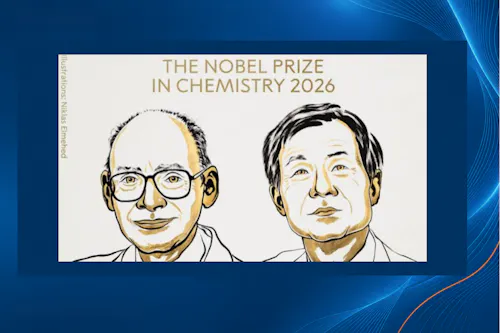
Scientific recognition can come decades after the experiments that earned it. For Henri B. Kagan and Kenso Soai, the 2026 Nobel Prize in Chemistry celebrates discoveries made years earlier, highlighting the lasting impact of a research question pursued over time.
Kagan of France and Soai of Japan share the 2026 Nobel Prize in Chemistry for discoveries that helped explain how chemical reactions can favor one mirror-image form of a molecule. Their work has also informed the chemistry used to manufacture pharmaceuticals.
Many molecules come in two forms that resemble left and right hands. They look similar, but their interactions with living systems can differ significantly. Understanding how one form becomes dominant challenged researchers for decades.
In research published in 1986, Kagan and his colleagues demonstrated that a catalyst’s molecular imbalance could produce an even greater imbalance in the reaction’s products. Soai and his colleagues reported a breakthrough in 1995, showing how a molecule could help catalyze its own production while amplifying a small initial preference for one mirror-image form. Their 2003 study demonstrated amplification to an almost exclusive preference for one form.
Behind the technical achievement is a familiar part of research: progress takes time. This year’s prize recognizes discoveries made decades ago, reminding us that the significance of a laboratory experiment can continue to grow long after the results are published. For anyone working through a difficult research question, that is an encouraging thought.
References:
Press release. NobelPrize.org. Nobel Prize Outreach 2026. Tue. 20 Oct 2026. <https://www.nobelprize.org/prizes/chemistry/2026/press-release/>