
Membrane Filtration for Fruit Juice and Flavor Processing: From Clarification to Concentration
· Filtration Resources
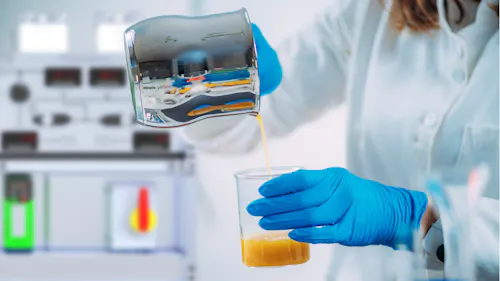
Clarifying fruit juice and concentrating its dissolved components involve different separation goals, but both require attention to the final product composition and quality. Membrane filtration offers options for removing suspended material, separating selected dissolved compounds, and reducing water content at relatively mild temperatures.
Microfiltration (MF), ultrafiltration (UF), nanofiltration (NF), and reverse osmosis (RO) can be used individually or in an integrated process. Selecting the appropriate approach requires testing with the actual juice to determine which membranes and operating conditions achieve the desired separation while maintaining juice quality, including flavor, aroma, color, and nutritional content. Sterlitech lab scale membranes testing products allows multiple membrane chemistries and pore sizes to be compared under controlled conditions, measuring flux, rejection, fouling behavior, and cleaning conditions.
How is Membrane Filtration used in Juice Processing?
The first step involves washing and sorting fruits, then they are typically crushed, pressed, and processed to extract juice. The resulting liquid may contain pulp, suspended solids, pectin, proteins, sugars, organic acids, minerals, pigments, and other soluble compounds.
Each membrane technology can perform specific separation functions depending on the desired product.
- Microfiltration and ultrafiltration can be used for clarification by removing suspended solids, pulp, colloidal material, and other larger components. These processes can also serve as pretreatment before tighter membrane separation.
- Nanofiltration may be evaluated for selective separation and partial concentration of dissolved components.
- Reverse osmosis can remove water while retaining much of the dissolved material, making it particularly useful for juice concentration and pre-concentration.
Why Consider Membranes for Juice Concentration?
Traditional thermal evaporation concentrates juice by removing water through vaporization. Exposure to elevated temperatures can affect heat-sensitive components and contribute to changes in flavor, aroma, and color.
Membranes provide an alternative method of concentration. Pressure drives water through a semipermeable membrane while dissolved components are retained in the concentrate stream. Because water does not need to undergo a phase change, membrane concentration can operate at relatively mild temperatures.
However, RO does not necessarily replace evaporation entirely. As juice becomes more concentrated, viscosity and osmotic pressure increase, while permeate flux typically decreases. Membrane fouling and concentration polarization can further limit performance. RO may therefore be particularly valuable as a pre-concentration step before subsequent processing.
Developing the Membrane Process
Membrane selection should be based on lab experimental testing with the actual feed rather than theoretical assumptions alone. Juice composition can vary significantly depending on fruit type, processing conditions, solids content, and desired product characteristics.
Important parameters to evaluate include membrane type, applied pressure, crossflow velocity, temperature, permeate flux, rejection rate, concentration factor, and fouling behavior.
Sterlitech's membrane and process development solutions provide a pathway for evaluating these parameters at increasing scales.
Initial membrane screening can identify promising membrane candidates while minimizing feed requirements and development costs. Selected membranes can then be evaluated under crossflow conditions using MembraMax™ Benchtop SystemsMembraMax™ Benchtop Systems, allowing researchers to study pressure, flow, concentration, flux, and rejection under controlled conditions.
Once suitable membranes and operating conditions are established, Sterlitech Skid Mount Membrane Filtration SystemsSterlitech Skid Mount Membrane Filtration Systems can support larger-scale process development and pilot testing. Skid systems can be configured with flat sheet crossflow cells or spiral wound membrane housings, providing a practical transition toward increased membrane area and processing capacity.
Ask an Expert about membrane selection and process development for your fruit juice clarification or concentration application.