







We're excited to share that Anna Solomonova, Membrane Process Development Sales Manager, will be attending ICOM 2026 (International Congress on Membranes and Membrane Processes), hosted by the North American Membrane Society (NAMS), in San Antonio, Texas, from July 20–23.
ICOM is one of the world's leading conferences dedicated to membrane science and technology, bringing together researchers, engineers, and industry professionals to share the latest advancements in membrane materials, separation processes, water treatment, biotechnology, and sustainable manufacturing.
Let's Connect
Anna will be attending sessions, participating in discussions, and engaging with fellow professionals throughout the conference. Whether you're developing new membrane materials, optimizing separation processes, or scaling membrane technologies, she would love to connect.
See you in San Antonio!

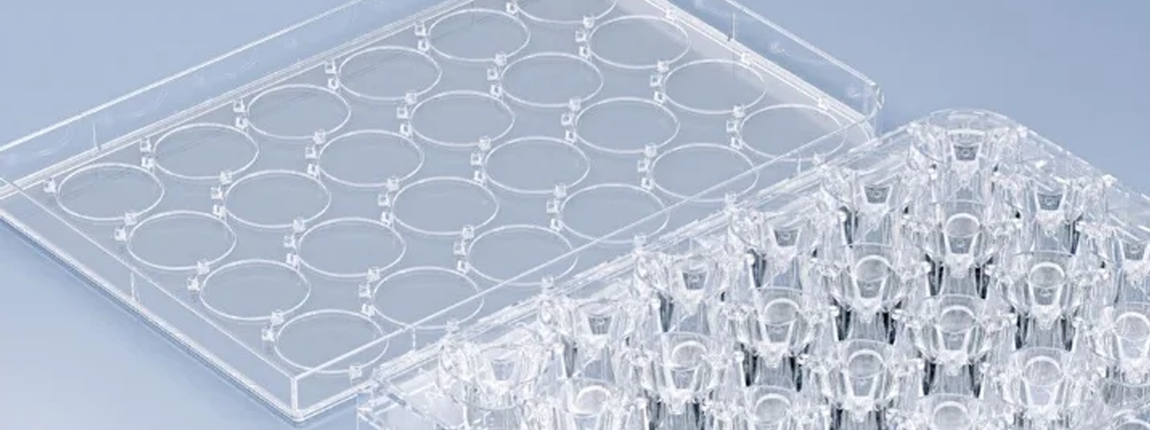
We're excited to share that Lexi Simpkins, Ph.D, Bioprocessing Sales Representative, will be exhibiting at the Life Science Exhibits at UCSF Mission Bay on July 8 and UCSF Parnassus on July 9. These events bring together researchers and leading life science suppliers to showcase technologies and solutions that support biomedical research and laboratory workflows.
For Sterlitech, the UCSF Life Science Exhibits are a great opportunity to connect with the research community and discuss solutions for cell culture, bioprocessing, and laboratory filtration applications.
Let's Connect
Whether you're developing new cell culture workflows, optimizing bioprocesses, or looking for reliable filtration solutions, Lexi would love to connect. Stop by to discuss your research, explore Sterlitech's product offerings, and discover solutions tailored to your laboratory's needs.
Exclusive Show Offer: First-time customers who visit the Sterlitech table at the Life Science Exhibits can receive 10% off (offer expires 12/31/26).
We look forward to seeing you at UCSF Mission Bay and UCSF Parnassus!

The U.S. Food and Drug Administration (FDA) together with the Department of Health and Human Services (HHS), recently announced plans to phase out several petroleum based synthetic food dyes from the U.S. food supply [1]. This shift is expected to accelerate investment in natural colorant development, creating new challenges for food and beverage manufacturers seeking to maintain color consistency, stability, and production efficiency.
As food and beverage manufacturers begin transitioning toward natural color alternatives, the challenge extends beyond simply replacing one ingredient with another. Companies must also develop reliable methods to extract, purify, and concentrate natural colorants while maintaining product quality and consistency.
Natural colorants such as butterfly pea flower extract, gardenia blue, algae-derived blue pigments, turmeric-derived curcuminoids, and anthocyanin-rich fruit extracts are sourced from complex biological matrices and often contain co-extracted solids, proteins, polysaccharides, sugars, and salts that can affect purification, stability, and product performance [2].
Compared to synthetic dyes, these colorants are more sensitive to temperature, pH, oxidation, and light, making color fading, hue shifts, and reduced shelf-life common challenges. As a result, manufacturers require concentration and purification processes that operate under mild conditions while maintaining tight control over product quality.
Why Membrane Filtration Matters
Membrane separation provides non-thermal clarification, fractionation, concentration, and desalting. Different membrane processes can address specific challenges throughout production:
- Microfiltration (MF) removes suspended solids, cell debris, and large particulates from crude botanical or fermentation-derived extracts.
- Ultrafiltration (UF) separates proteins, colloids, and higher-molecular-weight impurities from lower-molecular-weight pigment streams.
- Nanofiltration (NF) concentrates pigments while partially removing salts, sugars, or low-molecular-weight impurities depending on membrane selectivity.
- Reverse osmosis (RO) further concentrates purified streams by removing water at relatively mild temperatures compared with thermal evaporation.
Unlike evaporation-based concentration, membrane processes may better preserve pigment functionality and reduce thermal degradation risk for sensitive natural ingredients. This is important when manufacturers are trying to match color strength and shelf stability while transitioning from synthetic systems.
Supporting Natural Colorant Process Development
Selecting the right membrane and operating conditions is critical because every natural colorant presents a unique combination of pigments, impurities, and fouling characteristics. Before committing to commercial equipment, researchers often perform laboratory scale studies to identify the most effective membrane strategy.
As researchers and manufacturers move toward natural color systems, they need to evaluate rejection performance, flux, and fouling before scaling to a commercial process. Sterlitech’s membrane process development products and systems support feasibility studies by allowing researchers to evaluate membrane performance under controlled laboratory crossflow conditions.
1. Identify the Right Membrane for Natural Color Purification
With Sterlitech crossflow systems such as the HP4750, Cross Flow Cells, Benchtop Cross Flow Systems, or Skid Mounted Systems, users can test multiple membrane chemistries and MWCO ranges to determine which system enables the required balance of:
- dye rejection
- impurity passage
- permeate flux
- concentration factor
This is critical because natural color extracts can differ widely in molecular composition, and the success of the process depends on matching membrane selectivity to the target pigment and impurity profile. A membrane screen at lab scale reduces reformulation risk and provides data needed for downstream process design.
2. Understanding Fouling Before Scale Up
Natural color extracts frequently contain components that promote membrane fouling, including polysaccharides, proteins, fine particulates, and soluble organics. Sterlitech’s process development platforms allow users to measure flux decline, compare operating conditions, and assess the effectiveness of pretreatment and cleaning strategies before scale-up. Early fouling characterization is essential because natural ingredients tend to introduce greater variability than synthetic dyes, and that variability can directly affect membrane performance and operating cost.
3. Generating Scale Up Data for Commercial Process Design
The FDA’s timeline and the broader state-level momentum indicate that the transition to natural colorants is likely to accelerate across the food sector. Industry analysis also points to significant investment needs in quality systems, analytical testing, and manufacturing adaptation.
The shift away from petroleum-based synthetic dyes is reshaping food formulation and ingredient processing. The technical challenge is not only finding a natural replacement colorant, but also developing a robust method to extract, purify, and concentrate at scale. From membrane screening and fouling evaluation to pilot-scale process development, Sterlitech supports researchers and manufacturers throughout the filtration development process. Ask an Expert to learn how our membrane filtration solutions can help optimize your natural colorant application.
References
[1] Office of the Commissioner, “HHS, FDA to phase out Petroleum-Based synthetic dyes in nation’s food supply,” U.S. Food And Drug Administration, Apr. 22, 2025. https://www.fda.gov/news-events/press-announcements/hhs-fda-phase-out-petroleum-based-synthetic-dyes-nations-food-supply
[2] W. M. Neal, A. G. Osman, I. A. Khan, and A. G. Chittiboyina, “Natural product-based colorants as substitutes for petroleum-based synthetic food dyes: sources, chemistry, and characteristics,” Food Chemistry, vol. 501, p. 147561, Dec. 2025, doi: 10.1016/j.foodchem.2025.147561.