












Sterlitech recently attended Pittcon Conference + Expo 2026, held in San Antonio, Texas, where our team connected with scientists, researchers, and industry professionals from across the analytical and laboratory community.
The conference provided an excellent opportunity to exchange ideas, discuss industry challenges, and learn about emerging technologies shaping analytical science and laboratory workflows. Events like Pittcon continue to play an important role in bringing the scientific community together to share knowledge and advance innovation.
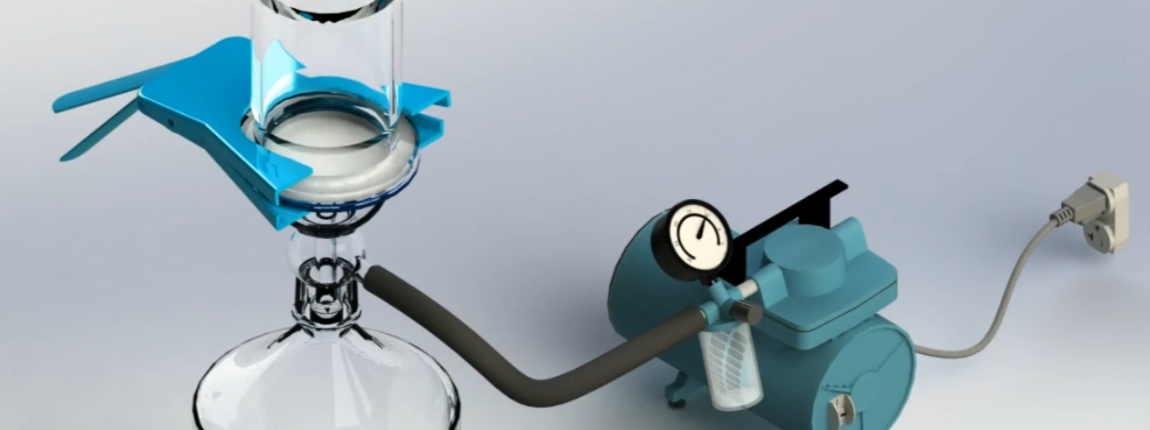
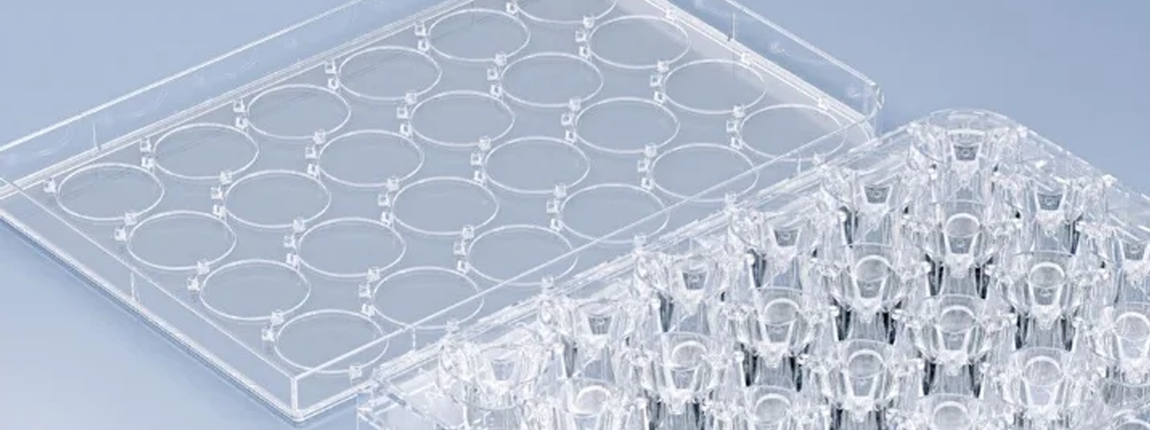
If you missed our display of products ranging from vacuum pumps, vacuum manifolds, membrane filters, and cellQART® Cell Culture Inserts and Well Plates and would like to learn more, ask an expert now.
We want to thank everyone who took the time to connect with our team during the event and look forward to continuing the conversations moving forward.
See you in Pittsburgh in 2027!

Pressure-driven membrane technology has become a cornerstone process for protein separation and purification, offering a scalable and gentle alternative to traditional thermal and chemical methods Among the various membrane-based processes available today, pressure-driven processes, microfiltration (MF) and ultrafiltration (UF), are most applicable due to their simplicity, scalability, and gentle operating conditions. These processes are used across biotechnology, dairy, food processing, and pharmaceutical industries.
Why Pressure-Driven Membranes?
Membranes act as selective barriers, allowing certain species to pass while retaining others based on size and, in some cases, charge. Compared to thermal or chemical separation methods, membrane processes:
- Operate at low temperatures
- Require no phase change
- Consume less energy
- Preserve protein structure and activity
These advantages make them particularly suitable for sensitive biological products.
Microfiltration (MF): Clarification and Cell Removal
Microfiltration membranes typically have pore sizes ranging from 0.1–10 µm. In protein processing, MF is primarily used for:
- Removal of cells and cell debris from fermentation broths
- Bacterial and spore reduction
- Clarification of protein-containing solutions
Importantly, most proteins are much smaller than MF pores and therefore pass through the membrane while larger particles are retained.
Applications:
- Recovery of proteins from fermentation
- Reduction of bacteria in skim milk (cold pasteurization)
- Pretreatment before UF concentration
MF modules are available in flat sheet, spiral-wound, hollow fiber, and tubular configurations, allowing flexibility in process design. Polyethersulfone (PES) and Polyvinylidene Fluoride (PVDF) are well-suited due to their chemical resistance and hydrophilic options. Ceramic membranes offer additional durability for high-temperature or aggressive cleaning environments.
Ultrafiltration (UF): Protein Concentration and Fractionation
Ultrafiltration membranes are characterized by their molecular weight cutoff (MWCO). UF is the workhorse of protein processing.
Core UF Applications:
- Protein concentration
- Buffer exchange (diafiltration)
- Desalting
- Fractionation of proteins by size
UF has largely replaced size-exclusion chromatography for concentration steps due to its lower cost and ease of scale-up. Polyethersulfone (PES) is widely used in UF for its broad pH and chemical compatibility. Polyacrylonitrile (PAN) offers low protein binding, making it useful for dilute or sensitive proteins streams. Ceramic membranes provide robustness for demanding process conditions.
In dairy applications, UF is widely used to:
- Concentrate whey proteins
- Improve cheese yield
- Recover valuable protein fractions from waste streams
Conventional UF is primarily size-based and is most effective when proteins differ by at least a ten-fold molecular weight difference. Process performance is strongly influenced by:
- pH
- Ionic strength
- Transmembrane pressure
- Crossflow velocity
Optimizing these parameters can significantly improve transmission and selectivity without introducing external fields.
Sterlitech offers a wide range of flat sheets and spiral wound membranes suitable for UF applications. Flat sheet testing cells are used to evaluate flat sheet membranes and are typically the first step in assessing separation performance for protein separation. The next stage involves spiral wound testing, for example using an 1812 element, which requires a spiral wound housing to complete the test.
Fouling: The Critical Challenge
Protein fouling is the primary operational challenge in MF and UF systems. Protein fouling in membrane systems causes flux drop and is primarily governed by protein–membrane and protein–protein interactions. The main forces involved include van der Waals forces, electrostatic interactions, and polar interactions between surfaces [1]. Protein adsorption typically begins with the formation of a monolayer driven by protein–membrane interactions, after which additional fouling occurs as a result of protein–protein interactions [2]. Surface modification, hydrophilic membrane materials, optimized hydrodynamics, and proper cleaning protocols are essential to maintaining performance. Bench and pilot scale testing are used to evaluate the performance of newly developed modified membranes.
Conclusion
Pressure-driven membrane processes offer a practical and scalable path for protein separation and purification across biotechnology, dairy, and pharmaceutical applications. Selecting the right process, MF for clarification and UF for concentration and fractionation, depends on the target protein, process conditions, and purity requirements. While fouling remains an operational challenge, proper membrane selection and process optimization ensure reliable and consistent performance.
Contact our team of experts to learn more about membrane selection and process development for protein separation and purification applications.
References
[1] J. W. Chew, J. Kilduff, and G. Belfort, “The behavior of suspensions and macromolecular solutions in crossflow microfiltration: An update,” Journal of Membrane Science, vol. 601, p. 117865, Jan. 2020, doi: 10.1016/j.memsci.2020.117865.
[2] A. D. Marshall, P. A. Munro, and G. Trägårdh, “The effect of protein fouling in microfiltration and ultrafiltration on permeate flux, protein retention and selectivity: A literature review,” Desalination, vol. 91, no. 1, pp. 65–108, Mar. 1993, doi: 10.1016/0011-9164(93)80047-q.

Microplastics are everywhere. Scientists have found them in the deepest ocean trenches, in Arctic ice, in agricultural soils, in drinking water, and increasingly, inside the human body itself. Researchers have identified microplastic particles in human blood, liver tissue, and even brain samples. Yet despite their ubiquity, one fundamental question has remained stubbornly difficult to answer: what exactly happens to these particles once they enter a living organism?
A new study published in the journal, New Contaminants, proposes an innovative approach that could finally let scientists watch microplastics in real time as they move, transform, and break down inside biological systems by making them glow.
The Gap in Our Knowledge
Global plastic production now exceeds 460 million tons per year, and millions of tons of microscopic fragments are released into the environment annually. Laboratory studies have linked microplastic exposure to inflammation, organ damage, and developmental problems. But tracking what those particles do inside of a living body has proven far more challenging.
"Most current methods give us only a snapshot in time," said corresponding author Wenhong Fan. "We can measure how many particles are present in a tissue, but we cannot directly observe how they travel, accumulate, transform, or break down inside living organisms."
Common detection techniques, including infrared spectroscopy and mass spectrometry, require destroying tissue samples to analyze them. That makes it impossible to track how particles behave dynamically, over time, within a living system. Fluorescence imaging has long offered a potential workaround, but existing methods suffer from fading signals, leaking dyes, and reduced brightness in complex biological environments.
A New Approach: Glow Built In from the Start
The research team, led by Fan at Shenyang Agricultural University, took a different approach. Rather than coating plastic particles with fluorescent dye, they incorporated light-emitting components directly into the plastic's molecular structure during synthesis, a method they call fluorescent monomer controlled synthesis.
The technique uses aggregation induced emission materials, which glow more intensely when clustered together rather than dispersed. This counterintuitive property (more concentration equals more light, not less) makes the signal more stable and reliable in the kinds of dense biological environments where older fluorescent dyes tend to fail.
The result is a microplastic particle where the fluorescent material is distributed evenly throughout its entire structure, not just on its surface. That distinction matters enormously for research purposes: as particles degrade and fragment into smaller and smaller pieces, every fragment, no matter how tiny, remains visible and trackable. Scientists could in theory follow a single plastic particle from ingestion all the way through breakdown.
What This Could Mean for Health and Environmental Research
The implications for both environmental toxicology and human health research are significant. With a reliable, real-time tracking tool, researchers could begin answering questions that have so far been out of reach: How do microplastics move from the gut into the bloodstream? Do they accumulate preferentially in certain tissues? How quickly do different polymer types break down inside a living organism, and what byproducts do they leave behind?
The technique is still in the experimental stage, grounded in established polymer chemistry and biocompatible fluorescence imaging principles. But as regulatory agencies around the world begin grappling with how to set safe exposure limits for microplastics, tools that reveal behavior inside living systems, not just presence or absence, will be essential for building an evidence base.
References:
Biochar Editorial Office, Shenyang Agricultural University. "Scientists make microplastics glow to see what they do inside your body." ScienceDaily. ScienceDaily, 13 February 2026.